Multiple sclerosis (MS) can make it hard to exercise. You might feel too tired, have trouble walking, or worry about falling. MS-related fatigue can make even simple movements feel challenging, and the thought of a formal workout routine may seem impossible. But staying active doesn't require a gym, and you don't need to power through fatigue to benefit from movement.
Simple tasks around your house can be exercise too. You can do these at your own pace when fatigue levels allow. Non-exercise activity thermogenesis (NEAT) is a way to stay active through simple daily tasks such as walking, cleaning, stretching, and cooking. These activities can be broken into smaller chunks when fatigue strikes, allowing you to rest as needed while still including movement into your day.
NEAT can be a good way to fit exercise into your day without forcing you to follow a formal routine that could drain your limited energy. You can adjust activities based on how tired you're feeling — perhaps doing light stretching on high-fatigue days or tackling gentle household tasks when energy permits.
Research shows that moving more — in whatever form — can improve stamina, energy levels, and quality of life if you have MS. Importantly, regular movement through NEAT activities may help ease MS fatigue over time. This creates a positive cycle where gentle activity helps boost the energy you have available for daily tasks.
Why NEAT Can Work for MS
NEAT works because it's flexible and adaptable to your energy levels and fatigue patterns. Daily activities are great ways to get moving because you get to choose which tasks work best for you based on how tired you're feeling. You can head to the gym on days you feel energetic and fatigue is minimal, but when you wake up drowsy or experiencing MS fatigue, you could use a NEAT routine to stay active instead.
On days when you are very tired, even the lightest household tasks can count as movement, allowing you to honor your body's need for rest while still maintaining some activity level.
"There's a lot of physical activity that you could do in your daily life that might not even sound like exercise, but would give you a lot more movement, would really help your body function better,” Kathy Zackowski, associate vice president of research at the National Multiple Sclerosis Society, says.
And the benefits go beyond physical health, Zackowski says. It helps with thinking, mood, and mental health, too.
"Exercise changes some of the chemicals in our brain that allow us to feel good about what we're doing and about what our life is like," Zackowski says.
"That's a really natural way to optimize your mindset and your cognitive abilities."
How to Use NEAT in Your Daily Life
Even small additions throughout the day can make a difference — and offer larger benefits over time:
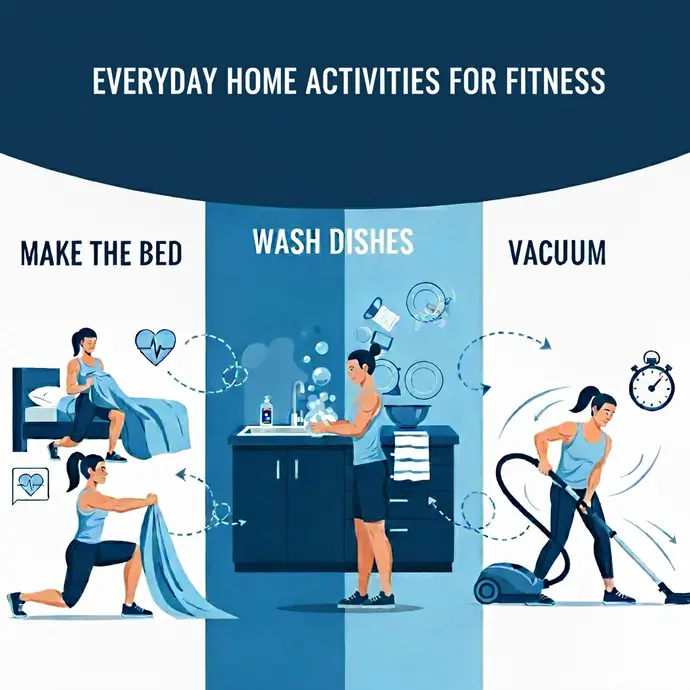
- Make your bed in the morning. Nicely straightened sheets can bring a sense of peace and order to your bedroom. You'll also get an upper body workout as you throw the blankets over the mattress.
- Do manageable chores throughout the day. Scrub the dishes. Fold laundry. These count! If you're tired of sitting, check a chore off your list and stand up to do it, if you can. You'll also get in arm and torso movements while you wash the plates or pick up dirty clothes.
- Vacuum the living room. It's the perfect excuse to work your upper body while getting some steps in. If you feel adventurous, turn on a favorite tune and add a few more rooms to the vacuuming list. Make it an opportunity to stroll or even dance while you clean.
- Tackle a deep-cleaning project. Is there a hard-to-reach crevice in your home that needs deep cleaning or dusting? Move that couch out of the way or sort through some of those boxes that have been in your garage for years. Who knows what treasures you'll find! Plus, your body will enjoy the workout.
- Get your mail from the mailbox. In the process, climb up and down the stairs. If you're in a wheelchair, you'll get even more wheel pushes in your daily routine.
- Take a quick walk or roll your wheelchair outside. First thing in the morning, you'll get steps or pushes in, plus a dose of fresh air. Natural light offers health benefits and gives you a good reason to step outside.
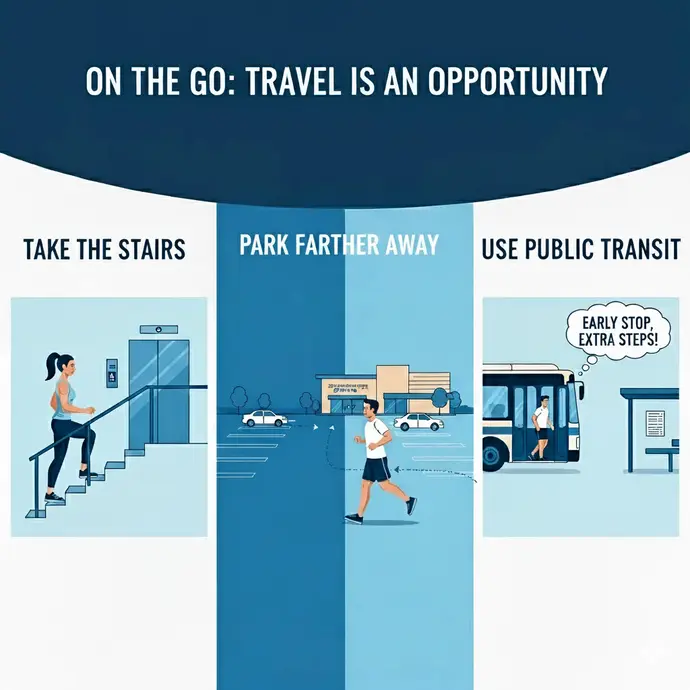
- Use public transit. Options such as the bus or metro can be a great way to add in a little extra walking and standing time. You might just make a new friend while you wait!
- Park farther away. If you have to drive, challenge yourself to park a little bit further away from your destination than normal. Even the stroll from your car to the grocery store could add some new pep to your step or build your upper body strength if you're wheeling a chair.
- Hit the stairs and climb that hill. Have an errand or a doctor's appointment to go to? Take the stairs rather than the elevator. Even if you need to walk slowly, you'll still get an aerobic climb up and down. You can alternate between the elevator and stairs if you need to, perhaps taking the stairs up and the elevator down. Over time, you can increase your challenges. If stairs aren't your thing, climb up the hill to your local park or a neighbor's house for a cardio workout.
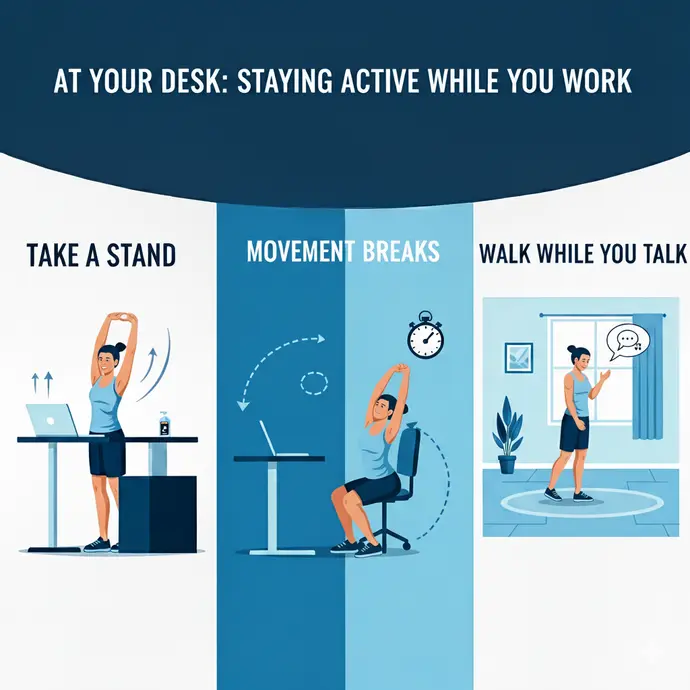
- Take a break to stand or stretch. It's easy to sit at a desk all day. Put your computer on a stable ledge or standing desk and stand up to work for a little bit every half hour. Standing can help you focus and feel less tired.
- Set a timer for movement breaks. If you work at a desk for hours, set a timer for at least every hour. Walk around the room each time your timer goes off. You could also do strength exercises, such as leg lifts, squats, or arm exercises with a stretchy band.
- Walk while you talk. About to hop on an important business call or chat with an old friend? Walk around the house while talking, or take a short jaunt through your neighborhood. You might be so focused on the call that you barely notice the extra steps.
- Try seated exercises. If standing isn't in the picture, do simple stretching exercises or chair yoga. This can help improve sleep quality, build stronger muscles, and ease stress and anxiety. Try a round of chair yoga on your lunch break.
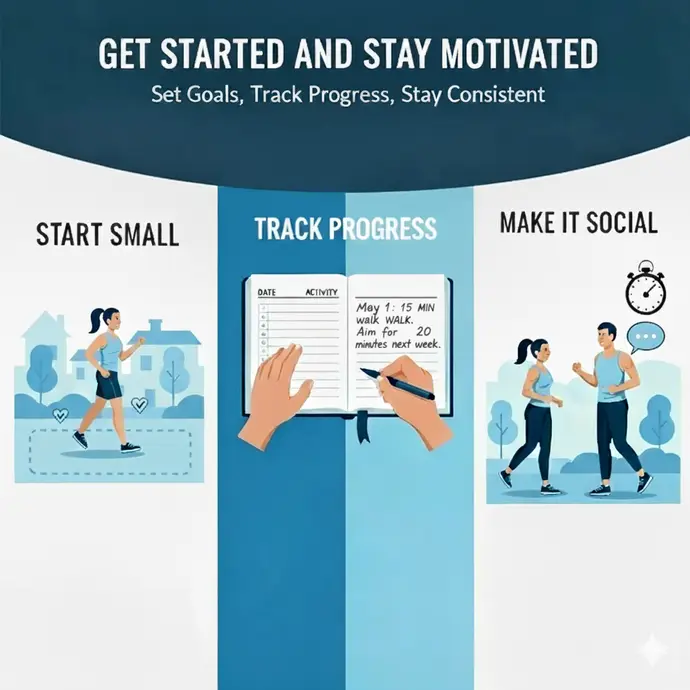
- Start small and be consistent. Rather than try to climb stairs five times a day right away, start with a daily walk around the block. Try not to increase your physical activity by more than 10% each week while you get started. Try to add something new, but small, next week.
- Set goals and track progress. Keep a journal to track your progress and see how you feel with the new additions. If something doesn't work for you, ask yourself: Is there something that would fit better in your schedule? Would a different activity be more fun or easier to do?
- Make it social. "I encourage people to talk about their exercise with their friends," Zackowski says. "I think that process gives you a little bit more ownership of what it is you're participating in."
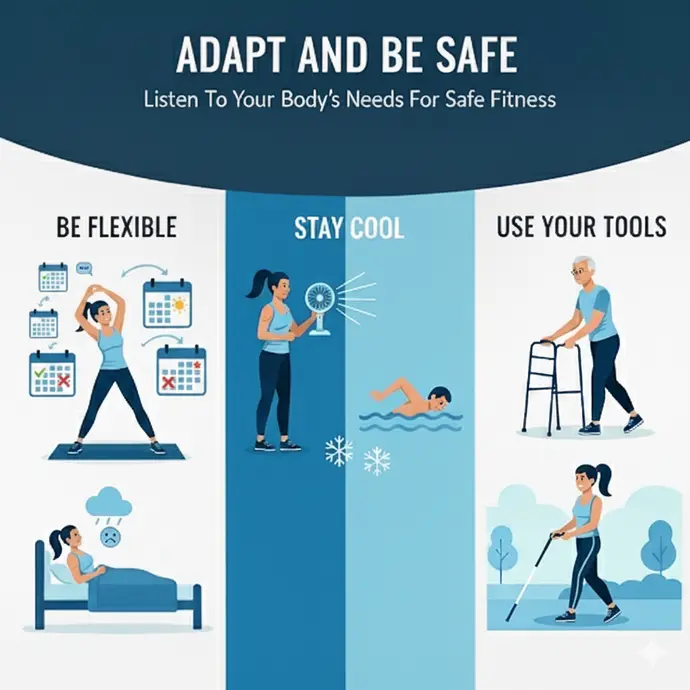
- Be flexible. Remember that MS symptoms and fatigue levels may come and go or get worse at certain times. One day, you may want to run a marathon, while the next, you can barely get out of bed due to extreme fatigue. Look for ways to ease your goals on days you don't feel good or when fatigue is particularly draining, and increase your exercise plans on days you have more energy. Over time, you'll build stamina and find that your fatigue becomes more manageable with regular movement. If your MS gets worse over time, you may need to update your routine. Three flights of stairs daily may feel great for now, but it might not always be like that as fatigue levels may keep changing.
- Be aware of the heat. Heat worsens MS symptoms like fatigue for some people. This could be from hot weather, a fever, or hard exercise. You can use a cooling cloth or keep a personal fan on hand to help fight heat-related fatigue. If you have access to a pool, a quick dip in the water is a great way to get moving, stay cool, and improve your balance.
- Adapt your tools to your energy levels. If you use a cane or wheelchair, find creative ways to fit exercise into your routine. For instance, unpack groceries a couple of times a week to work your upper body without tiring yourself a lot, especially when fatigue is high. When your energy allows, wheel yourself to a local cafe for your morning coffee. If you have a persistent limp or leg fatigue, avoid unassisted outdoor walks or steep stairs. Instead, use a cane and find a manageable nearby hill to climb, even on lower-energy days.
- Know when to use different tools. Keep in mind that even if you don't use a cane or walker every day, they may be helpful when you work out or when fatigue makes balance more challenging. "Maybe just use that walker or cane when you exercise so you can get a little bit more out of your exercise," Zackowski says. "It might allow you to go a little further safely."
- Respect your limits. You have the power to improve your fitness in ways that work for your body and energy levels. Do not cross the limits of your own safety or health by pushing through severe fatigue or exhaustion.
Keep Moving Forward
Exercise can feel like a constant challenge if you have a hard time walking or often feel tired. MS fatigue can make even beloved activities seem tough, leaving you feeling defeated before you even start. Remind yourself of the activities, hobbies, and daily tasks you enjoyed before diagnosis for inspiration — whether bicycling with friends, dancing salsa, or strumming a guitar. While fatigue may change how you approach these activities, but it doesn’t mean you have to stop them completely.
"There shouldn't be any reason that you can't continue what you used to do, unless it poses a risk to your safety," Zackowski says. "I would encourage people to adapt their activity, rather than stop their activity." This might mean dancing for shorter periods when fatigue is high or finding ways to enjoy music-making even on your most exhausting days.
With careful planning, new habits, and a gentle attitude toward your changing energy levels, you can fill your days with plenty of movement — no gym membership required.
Show Sources
SOURCES:
Cleveland Clinic: "Non-Exercise Activity Thermogenesis Is NEAT!," "How to Get Back to Exercising After a Long Break."
Harvard Health Publishing: "Why You Should Move — Even Just a Little — Throughout the Day."
The Mayo Clinic: "Fitness Program: 5 Steps to Get Started."
Mission Health: "What Is Chair Yoga and Who Is It Best For?"
OSF HealthCare: "Standing Up for a Healthier Lifestyle."
PIH Health: "5 Surprising Health Benefits of Being More Organized Health Benefits of Being More Organized."
Physical Activity and Nutrition: "Outdoor Physical Activity in Natural Versus Urban Environments and Stress-Related Healthcare Utilisation."
Sports Medicine at Mayo Clinic: "7 Simple Stairway Exercises for a Healthier Heart and Body."
Texas Health: "Research Shows Incline Walking Could Be Just as Beneficial as Running."
UCLA Health: "Being in Natural Light Improves Mood, Increases Happiness."
University of Rochester Medical Center: "Exercise."