By Venetta Cash, as told to Keri Wiginton
I think my first MS episode happened when I was 25.
It started with numbness in the middle of my right thigh. When it began to spread, I went straight to the ER. The doctors thought it might be multiple sclerosis (MS), but my MRI didn’t show brain lesions. They found a few spots on my neck, but not enough to confirm anything.
Over the next month, the feeling crept up to my chest and then down my right leg. Eventually, it showed up on the other side too. After that, symptoms would come and go. And for the next 11 years, I bounced from doctor to doctor. Everybody had a different theory, but nobody gave me clear answers.
At 36, my body forced the issue. I was at the gym doing squats on the Smith machine. When I stood on my tiptoes to rack the bar, my right side gave out. I hit the floor and couldn’t move for half a minute.
A new MRI showed four lesions on my brain and one on my spine. That’s when I finally got the diagnosis: relapsing-remitting MS.
It wasn’t a total surprise, but hearing it out loud was still a shock. Lying awake at night wondering what my future would look like, I realized how important it is to have support, including a care team you can trust.
You can’t do this alone. You need people who are in your corner. Here’s how to find them.
Step One: Trust Your Gut
My first neurologist wasn’t a bad doctor, but we didn’t click. The first thing he said was, “MS isn’t mind over matter.” Maybe he wanted me to know I couldn’t just will myself better, but to me it sounded like “You have no control and are doomed to fail.” That’s not what I needed to hear.
During my relapse, I had a lot of trouble walking, standing, and lifting my arms. My neurologist started me on disease-modifying therapy (DMT), but he didn’t give me steroids. He didn’t really explain why, just said he didn’t like them.
Later, I learned that steroids are standard for MS relapses. They don’t change the long-term course of the disease, but they can help you recover faster and manage symptoms while DMTs take effect.
When I found that out, I was angry. I felt like I had suffered for no reason. If he could've made things easier, why didn’t he?
Looking back, I realize that experience taught me something important: Even good doctors can miss the mark when they don’t include you in the decisions about your care.
So if you leave every visit feeling confused, dismissed, or hopeless, start looking for someone new. I’m glad I did.
Step Two: Build a Team That Has Your Back
After a few months, my first neurologist told me, “You should find an MS clinic.” I didn’t know what that meant, and he never explained. So I asked around.
I do hair for a living, and a client with lupus told me an MS clinic is where they know the condition inside out and coordinate care. My aunt suggested Rush in Chicago, and I’ve been with the Rush Multiple Sclerosis Brain Health center ever since.
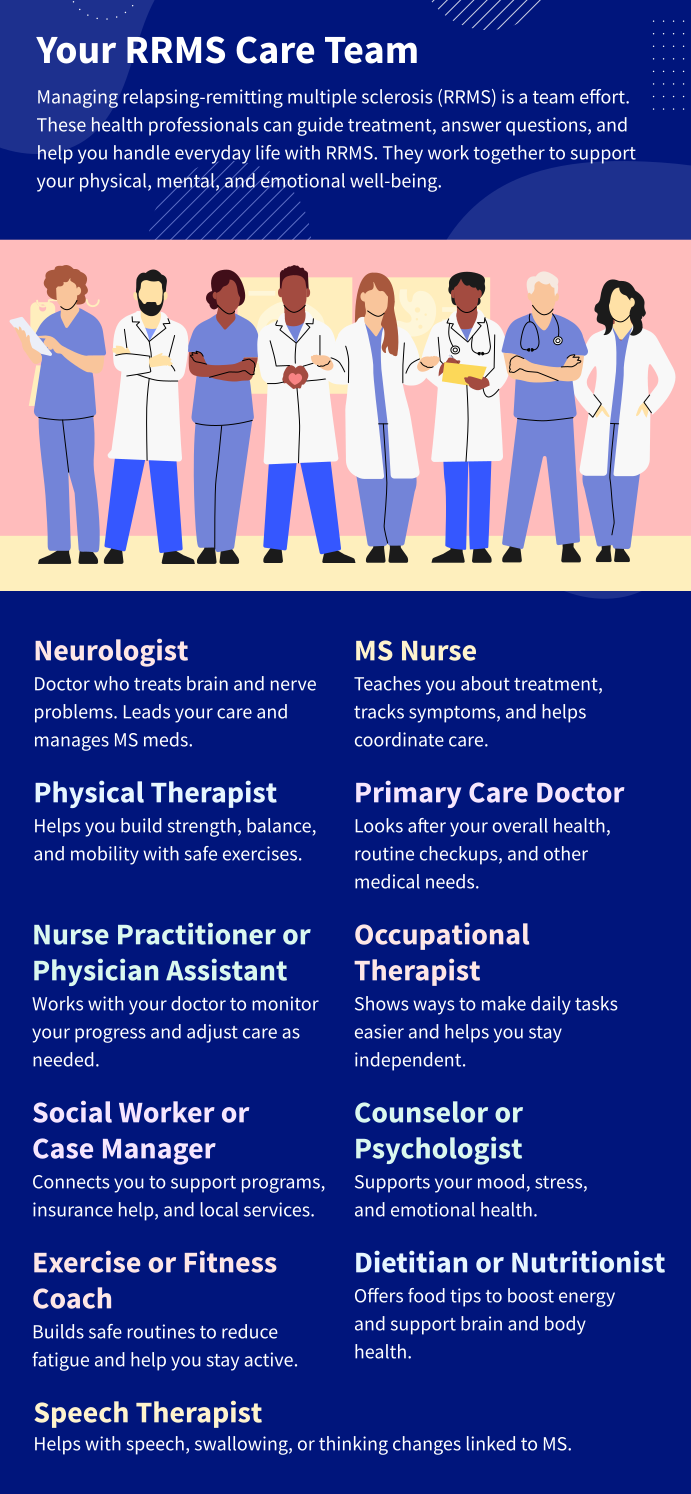
All my doctors are together now: neurology, primary care, GI, orthopedics, ophthalmology, psychiatry, psychology, gynecology. They share notes, communicate with each other, and actually listen to me, which makes a big difference.
MS isn’t just a neurological disease. It can affect your digestion, hormones, mood, energy, and movement. I also work with a personal trainer and have made exercise and nutrition the foundation of my life. Everything else fits around those two things.
It’s been 11 years since my diagnosis. While I’ve had other health issues, I haven’t had a relapse. I credit that to having the right people around me and learning how to speak up for myself and prioritize my health.
Step Three: Ask for Help
When I was diagnosed, my insurance was terrible. I paid out-of-pocket for almost everything: $1,200 for an MRI, $1,100 for a physical, $250 every time I saw the neurologist. I remember looking at those bills and thinking, “How is anybody supposed to do this?” It felt impossible.
But help is out there. You just have to ask for it.
Local resources along with national groups like the National MS Society, the Multiple Sclerosis Association of America (MSAA), and MS Lifeline can sometimes help pay for MRIs, medications, or even things like an air conditioner, since heat makes MS symptoms worse.
These groups can also connect you to clinics, walk you through the insurance maze, or put you in touch with others who’ve been where you are. Sometimes they even do the legwork and make those calls for you.
I also learned that support can come from unexpected places, so don’t be afraid to be vulnerable.
Once, when I lost my insurance and couldn’t afford an MRI, I posted about it online. A woman I went to high school with reached out and connected me with a program that covered my scan.
I eventually got my insurance back. But she’s still one of the first people I reach out to when I need support, especially when it comes to my mental health. We’re still friends today.
Step Four: Don’t Settle
Finding the right doctor is a lot like going on blind dates. You don’t know if it’ll work until you sit down and talk.
When I switched neurologists at Rush, they gave me a list of names. I picked a younger doctor, thinking he might be more open to listening. I chose right. He sat with me for a full hour as I went through my questions and concerns.
Instead of just telling me what to do, he asked how I wanted to live and what mattered to me. When I didn’t want a certain medication, he didn’t push. He explained my options and let me think it over. That was the first time I felt like a real partner in my own care.
You might have to meet with a few people before you find the right fit. If your doctor isn’t listening, explaining things in a way you understand, or giving you choices, keep searching. The right provider treats you like a person, not just a patient.
Step Five: Speak Up and Stay Curious
During my relapse, I had insomnia. Since I couldn’t sleep, I researched. I’d type the same question into Google a dozen different ways to see what came up. Then I took my list of questions to my doctor.
You can do the same. Ask questions like:
- What are my options for treatment?
- How will this affect my daily life?
- What are the side effects of this medication?
- How long will it take to feel a difference?
- Could physical or occupational therapy help?
Other good topics:
- Are there foods, supplements, or lifestyle changes that might help?
- What warning signs should I look out for?
- What can I do at home to feel better or support my health?
- How do I get a referral if I need to see another specialist?
- Can you explain that again if I don’t understand?
I wasn’t always good at advocating for myself, but I learned that nobody will hand you answers if you don’t ask. And keep asking until the answers make sense to you. If your doctor seems annoyed by your curiosity, that’s a sign to keep looking for someone who values it.
On tough days, when brain fog or fatigue hits, bring someone you trust to your visits. That’s someone who can ask questions and take notes. Sometimes you need backup or extra support. And that’s OK.
Step Six: Believe You Deserve Care You Believe In
I wish I could say that once you find your people, everything gets easy. It doesn’t. There are still days when I’m too tired to get out of bed and my body doesn’t do what I want it to. But you can mourn what you’ve lost and still celebrate how far you’ve come.
Since my diagnosis, my martial arts instructor started calling me a “triple threat.” I’ve earned orange belts in karate, judo, and aikido. I’ve also competed in two bodybuilding shows.
Martial arts gave me focus, balance, and confidence. And staying active reminds me that this body, the same one that once collapsed on the gym floor, can still do some pretty incredible things.
You don’t have to do karate or bodybuilding. But find something that makes you feel strong. Move in ways that remind you your body still belongs to you.
And remember that every day with MS is different. A solid support system makes all the difference. That’s why having a strong care team matters so much.
Show Sources
Photo Credit: Maskot/Getty Images
SOURCES:
Venetta Cash, 48, RRMS patient advocate, Chicago.