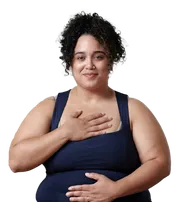
When Latoya Shauntay Snell collapsed on a New York subway platform, she thought she was just exhausted. She’d been training for her first marathon, working full-time, raising her son, and pushing herself harder than ever. But the real cause wasn’t overwork — it was starvation.
“I looked great, according to other people,” she says. “But I’ve never felt so low.”
Snell had been running to reclaim her health. Instead, she was quietly living with anorexia, a diagnosis that came as a surprise because she wasn’t underweight.
What Atypical Anorexia Looks Like
Atypical anorexia is an eating disorder similar to anorexia nervosa, where you quickly lose a lot of weight through dangerous changes in eating habits, extreme exercise, and other weight loss methods. You also struggle with body image, such as believing you weigh more than you actually do. The key difference is that people with atypical anorexia have a higher body mass index (BMI) before they begin losing weight, so the signs of sudden weight loss are harder to see.
The belief that people with larger bodies can’t have anorexia is a myth, says Elizabeth Wassenaar, MD, a Denver-based psychiatrist, obesity medicine specialist, and regional medical director at the Eating Recovery Center and Pathlight Mood & Anxiety Center. “Any person with a body – any size, any shape, any history – can have an eating disorder. We should never make assumptions based on how someone looks.”
To put this into context: Imagine someone who’s around 5 feet, 2 inches tall and weighs 115 pounds. Through extreme dieting and exercise, they drop their weight to 85 pounds and show other signs of an eating disorder, such as losing their menstrual cycle.
Now picture someone who’s 175 pounds and drops to 125 pounds, a normal and healthy weight for their height. But because they lost weight so quickly and so much, they’ve also stopped getting their period, and their vital signs are low. This is what atypical anorexia looks like.
The condition is part of a group of eating disorders that includes anorexia nervosa, bulimia nervosa, binge eating disorder, and others. The Diagnostic and Statistical Manual of Mental Disorders (DSM-V) classifies it as an Other Specified Feeding and Eating Disorder (OSFED), a “catchall” category for people who don’t meet the criteria for anorexia nervosa and other eating disorders but still have an illness related to food and weight.
Eating disorders are serious behavioral conditions that affect how you eat and can cause distressing thoughts and feelings. They harm your physical health, emotional well-being, and social connections. Around 25% to 40% of people in treatment centers for eating disorders have atypical anorexia, a rate that’s on the rise.
Snell’s restrictive habits eventually became life-threatening. She limited herself to 1,200 to 1,500 calories a day while marathon training, working out for hours at a time, and drinking heavily to cope with depression. Despite this, Snell didn’t believe she had anorexia because she didn’t fit the stereotype.
“I never pictured myself as a person who would be diagnosed with that, because everything that I visually see looks like a Barbie doll. It is not a plus-size woman,” she says.
The Hidden Dangers of Starving in a Larger Body
Like anorexia nervosa, atypical anorexia is a serious, life-threatening condition. The danger comes from prolonged starvation and weight suppression, not the number on the scale. And because people often don’t recognize the condition, those around you, including your doctor, may applaud you for taking control of your weight and health when, in reality, you need medical help.
Atypical anorexia is a whole-body disease, affecting you inside and out. “It’s deadly,” Wassenaar says. “Maintaining yourself in a state of malnutrition is an incredible assault on your physical and psychological health.”
Anorexia often starts with a distorted self-image. You may see yourself as overweight, even when you’re not. But with atypical anorexia, this fear might not just be in your mind, and you become fixated on your weight.
When you don’t eat enough, your electrolyte levels become unbalanced, leading to muscle weakness or even heart problems. Rapid weight loss strains the kidneys, making it harder for them to filter out waste, while your heart may slow down, and your blood pressure can drop. Your brain also suffers; severe restriction can cause seizures. Hormonal changes in your endocrine system can lower testosterone or estrogen levels, and for women, that can stop menstrual periods and have lasting effects on fertility. Your bones can become weaker, and your hair may thin or fall out.
Getting Help and Finding Balance Again
Treatment for atypical anorexia is the same as for other eating disorders, and includes therapy, nutrition counseling, and medication for other health conditions like depression or anxiety. A hospital stay may be necessary depending on your physical and emotional health.
Cognitive behavioral therapy (CBT) is a common type of therapy for people with eating disorders to help change their thinking and behaviors. You may have therapy on your own, with a group, or with your family. You’ll also work with a nutritionist or dietitian who focuses on eating disorders to help you improve your eating habits, grocery shopping, and meal planning skills.
Wassenaar suggests that care should be personalized, focusing on restoring your body to its healthiest size and state. “I don’t change my recommendation based on body size. I assess how weight-suppressed someone is and help them restore to where their body wants to be.”
Changing the Conversation Around Eating Disorders
Today, there’s more awareness and less stigma surrounding eating disorders across the weight spectrum. But there’s still a lack of training on eating disorders for health care professionals. And unfortunately, insurance companies may deny treatment to people in larger bodies because they don’t meet the underweight criteria, a situation Wassenaar describes as “heartbreaking and invalidating.”
She encourages curiosity and compassion, urging everyone to discuss eating patterns, dieting history, and body image with openness and without judgment.
For Snell, who now works as a fitness creator and founder of the fitness and food website Running Fat Chef, recovery from anorexia meant relearning her relationship with food and exercise. She now uses her platform to combat weight stigma, promote joyful movement, and advocate for inclusive healthcare.
“My work is much larger than fitness; it’s this holistic understanding of your mind, body, and soul. The true definition of joy is liberation.”