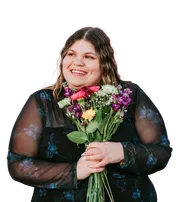
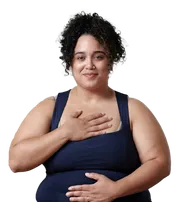
When someone encounters their 15 minutes of fame (or these days, “goes viral”), it can be for many reasons. For Latoya Shauntay Snell, 40, it was of all things, runner’s diarrhea. “I wrote about a very real issue no one talks about, and from then on my phone blew up with messages.” Runners and non-runners alike appreciated her candor, and she received a record number of followers after that post. Snell’s 15 minutes would extend to nearly 10 years and counting.
Running to a Beat of Her Own
In her 20s, Snell was diagnosed with disk degeneration and sciatica, which caused pain throughout her body. Doctors told her she would be disabled the rest of her life and that only weight loss would fix everything. Without knowing she was a chef and accomplished in making healthy (yet savory) dishes, they blamed poor eating habits as well.
While some might sit back and possibly give up after multiple health conditions, Snell decided that these diagnoses would not stop her. She didn’t start small, either. When a friend from across the pond (London) encouraged her to sign up for a marathon, she took on the challenge. (Side note: He didn’t show up for the race.) Snell showed up and was pleasantly surprised. “I saw Black women who were super happy at 6 in the morning … without coffee,” she says. “I saw that not only could I get physically fit, but I could make friends.”
That was a turning point and would start a new normal for Snell as a runner and later power lifter. Before she knew it, Snell was signing up for back-to-back marathons as her weight dropped close to 90 pounds. “I was celebrated for this, but people don’t understand the trauma to your body to lose that much weight that quickly,” she says.
Uphill Battles
Snell expected the act of running to be hard. What she didn’t anticipate were the sneers from the sides. Both so-called friends and strangers alike said she was too fat to run. Some questioned her choice for her culture. “I was told Black people don’t run!”
While many people encouraged Snell to keep going, a great number of folks — both on her blog and in real life — questioned her decisions as a woman in a larger body. “The number of insults I got and negative messages would make your head spin,” she says. Trolls in her DMS and in public comments said she was “too fat” to run and “if I were a runner, why was I still fat.”
Then one fateful day in 2017, as she reached what some would say is the pinnacle of running in the U.S., Snell embarked on the New York City Marathon. As she was crossing mile 22, one heckler shouted that it would take her “fat (bleep) forever to finish!” Snell doesn’t subscribe to the mantra that words don’t hurt like sticks and stones. “Words have power, and they can affect you.” However, instead of stopping in her tracks, Snell picked up the pace and kept running.
She signed up for more marathons. She started speaking out about feeling good in your body — no matter the size. Eventually, combining her culinary career as a chef, Snell started the blog RunningFatChef.com, and it has grown by leaps and bounds. Her story of staying active at various sizes has landed her coverage in Runner’s World, The Root, and Redbook magazine.
Dark Days on the Journey
On the surface, Snell was doing all the right things to stay healthy: moving, exercising, watching what she ate. But even good things can be done wrong. “When it comes to anorexia nervosa, people of color and plus-sized women — we are not included,” says Snell. “I continued to have this thought that if I just lose weight, people will find me more acceptable.”
That thinking led to Snell restricting her calories by a dangerous amount. “I was working around the clock, power lifting, training for marathons, and only about 1,200 calories a day,” says Snell. “People assume all runners are healthy, but there are some unhealthy practices — especially around food.”
Her mood swings, low energy, and dizziness were ignored until Snell fainted (face down) one day at work. “I remember hearing a co-worker scream because they thought I was dead,” she says. At the hospital is when Snell first heard the words disordered eating followed by a diagnosis of anorexia nervosa. Both an eating disorder and a mental health disorder, anorexia nervosa involves severe calorie restriction and dieting to lose weight. The result is a lack of proper nutrition, sometimes low body weight, and other health issues. It can lead to death if not caught in time. Today, Snell describes a constant struggle to keep her view of food as nourishment versus punishment.
Let Your Stews Be Hearty
Snell has a message for the running community: “I challenge you to season this food!” As a longtime chef, Snell encourages hearty but healthy eating. “Everything doesn’t have to be deep-fried to taste good. Let your stews be hearty,” she says. “Vegetables can outshine meat if you learn how to cook them.” Snell wants her audience to have fun with food and not see it as the enemy and coming to terms with something more is best.
“I’ve actually lost healthy weight and felt my best when I was eating more, not less calories,” says Snell. “Your body will beg for food and hydration and reward you with energy.”
To Be Body Neutral
After her bout with anorexia nervosa and three recent cancer scares (all clear), Snell isn’t taking anything for granted. She remains focused on staying active, eating well, and has added counseling to the mix. “Anorexia is like other addictions in that you’re never really free,” she explains. “If you’re not careful, you can fall off the wagon.”
Keeping a sound body and mind has shifted Snell into something she calls being body neutral. In response to the body-positive trend that countered fat-shaming, Snell has found her comfort right in the middle. “I am realizing that you can never make people happy,” she says. “I’ve learned on my platform that I will either impress or disappoint, and that’s OK.” She points to celebrities like Lizzo, who caught flak for losing weight. “People forget Lizzo is Elizabeth first! She’s human,” says Snell.
Instead of focusing on the scale, Snell makes sure her A1c levels are regulated, her PCOS is under control, and she’s learning to manage ADHD. “At my heaviest, I was still able to do clapping push-ups,” she says. “People are confused about how I can be so active and not lose weight, and I sometimes have to explain — well … I have PCOS and other health challenges.”
To Those Running the Race
It’s been a journey for Snell, but she hasn’t looked back. As both an ultra-runner and power lifter, Snell sees staying active as a lifelong venture. As a mother to an 18-year-old son, Snell has been intentional about passing the baton of life to him. “He struggles with some health conditions also, and I encourage him to ask every question — be curious,” she says. “I want him to know how to properly advocate for himself in this world. As a young Black male, I want him to know it’s OK to feel and to heal.”
For her son and the hundreds — if not thousands — watching, Snell wants people to know that “fatness is not the end of the world” and you are a person outside of your weight.
“You’re not just the sidekick in movies or the friend that needs to lower your standards in life or work,” she says. “Know that you’re powerful, so go fix your crown so you can help others!”