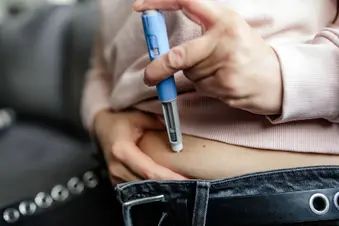
When you start taking GLP-1s, you’re probably excited about the expected changes to your body. These medications were created to lower blood sugar for diabetes, but many are now popularly used for weight loss. But in addition to changing your weight, they can also change the way your skin looks. You might be surprised at how different you look when you’ve lost fat, especially around your face.
GLP-1 drugs — also called GLP-1 agonists — were originally developed to treat type 2 diabetes. They lower blood sugar levels by mimicking the natural hormone glucagon-like peptide-1. GLP-1 encourages your pancreas to release insulin, which lowers the amount of glucose (a type of sugar) in your blood. GLP-1 slows your digestion, which keeps your blood sugar level and makes you feel full. When you feel full, you eat less. That can lead to weight loss.
A change in eating habits leading to rapid weight loss can have an impact on many factors of your appearance. You might notice saggy skin, dryness, wrinkles, and possibly some hair loss. Here’s a look at many of the ways using a GLP-1 can affect your skin.
Dehydration
GLP-1s are effective for weight loss because they curb your appetite and make you feel full for longer periods of time. But when you eat less, you often drink less, and that can lead to dehydration, where your body doesn’t get the fluids it needs to function well.
Some of the more common side effects of GLP-1s are nausea, vomiting, and diarrhea. When you have GI upset and you’re losing fluids, that can make dehydration worse.
When you don’t take in enough fluids, your skin can be affected. It might look and feel dry and wrinkled. Dehydration can also make your skin less elastic and less healthy.
The best way to fight dehydration is to prevent it. It’s important to drink liquids — particularly water — throughout the day, even if you don’t necessarily feel thirsty. You’ve likely heard you should drink eight glasses a day, but you might need to drink less or more depending on things like your age, overall health, and how active you are. Ask your doctor for tips if you’re unsure you’re getting enough fluids.
Fat Loss
When you lose weight quickly, you might notice some harmless but surprising changes. You lose fat and that can make you look thinner, but also can make you look like you’ve aged, especially around your face and neck.
Subcutaneous fat is found just under your skin. It fills out your face, gives it structure, and makes your skin appear smooth. When you lose that fat, that can cause your face to look hollowed and your skin to sag. Sometimes people call this Ozempic face or GLP-1 face because it’s so common. These medications don’t cause these changes directly. Instead, they can be a common side effect when you lose weight quickly.
When you’ve lost a lot of weight in a short period of time, sometimes your eyes might look a little more deep set than before. Just like losing large amounts of weight can cause bagginess and sagging around your stomach and arms, you can also see that droopiness around your face, jaw, and neck. Your skin can have a saggy, crepey appearance when it’s stretched out without that supportive fat underneath.
You might also notice more obvious lines and wrinkles without that support to plump your skin. That fat loss can also affect your mouth, so your lips might look thinner.
Changes in Collagen and Elastin
Losing weight rapidly can also lower the amount of collagen and elastin in your skin. These are two proteins that are key to keeping skin healthy, structured, and stretchy. Collagen primarily offers structure and strength, while elastin helps keep the stretchiness in your skin. When collagen and elastin levels drop, your skin can sag and wrinkle more easily.
To help your body make more collagen and elastin, you might try using skin care products that include ingredients that keep your skin healthy. Products with retinoids can encourage the production of collagen.
You may also want to consider skin care items with hydrolyzed elastin that may help your skin look younger. Creams containing ingredients such as vitamin A, vitamin C, vitamin E, and ferulic acid may also help with wrinkles and antiaging.
Your diet may make an impact on the amount of elastin and collagen in your skin. Foods like fatty fish, leafy greens, citrus fruits, and nuts can help your body make more of these key proteins.
Dry, Itchy Skin
You might notice that your skin feels dry and itchy when you take GLP-1s. That can be due to dehydration — from not drinking enough and from side effects like vomiting and diarrhea. Even low levels of dehydration can make skin feel dry and dull.
Rapid weight loss can also affect sebaceous glands. These are tiny glands found in your skin’s hair follicles that release an oily substance called sebum that keeps skin lubricated. This can cause your skin to dry out.
To help ease dry, itchy skin, keep hydrated by drinking plenty of fluids and by using moisturizers often on your skin. It’s especially helpful to apply thick moisturizers right after showering when your skin is still damp to help lock in the moisture. Limit showers to just 5-10 minutes, and use warm water to help avoid dry skin. Pat your skin dry with a soft towel — no rubbing — so you don’t irritate skin further.
Hair Loss
One common side effect of taking a GLP-1 drug is hair loss. You might notice thinning hair or that you are shedding more strands in your hairbrush or when you’re in the shower. It’s not the medication causing the hair loss, but it’s the rapid weight loss. Your body can be stressed by the change, so it sends its resources to protect vital organs. It doesn’t care so much about your hair.
Because a GLP-1 works for weight loss by curbing your appetite, you eat less. And that can mean you’re getting fewer key nutrients such as protein and iron that are important for so many bodily functions including healthy hair growth. It’s important that you choose nutritious foods like fruits and vegetables, whole grains, and lean meats to avoid any nutrient deficiencies that can have an impact on hair growth.
The stress-induced hair loss is called telogen effluvium and it’s temporary and harmless. Hair usually will grow back within a few months without treatment. In the meantime, you might consider trying topical products that contain minoxidil or supplements with biotin. They might help encourage hair growth. Check in with your doctor if you’re considering supplements.
Psoriasis
There is some potential good news with GLP-1s and the skin — particularly if you have psoriasis. Psoriasis is a skin disease that has symptoms including a rash and dry, scaly patches. Symptoms come in flares and can be triggered by weather, infections, certain medications, and sunburn. The disease has no cure, but in some cases, inflammation and symptoms might improve when you take weight loss drugs.
Tips for Skin Care
When you’re on a GLP-1, it’s important to boost nutrition, hydration, and skin care.
Avoid dehydration. Drink lots of water — usually around 8 cups or more — to stay hydrated. You don’t have to get all your fluids in your glass, though. Consider eating water-rich foods, like cucumbers, watermelon, celery, and soup.
Eat nutritiously. Even though you might not be so hungry, make sure you eat a well-rounded diet that includes plenty of protein. Protein helps build up muscles as you lose fat. Choose nutrient-dense foods to keep your body working at peak power as it deals with weight loss changes.
Use sunscreen every day. Get a good, protective sunscreen and use it every day, even when it’s not hot and sunny. Look for a broad-spectrum sunscreen that filters ultraviolet A and B rays (UVA, UVB). Choose an SPF, or sun protection factor, of 15 or higher and reapply every couple of hours when you are in the sun. Sunscreen helps prevent some signs of aging in the skin.
Follow a smart skin care routine. Good skin care can help keep your skin moisturized and help fight signs of aging. Use a gentle cleanser at least once a day and moisturize well. Look for ingredients such as retinol and vitamin C. Retinol acts as an exfoliant, sloughing off old skin cells and promoting collagen synthesis. Vitamin C encourages collagen production.
Show Sources
Photo Credit: Moment/Getty Images
SOURCES:
Cleveland Clinic: “GLP-1 Agonists,” “Dehydration,” “‘Ozempic Face’: What It Is and How To Avoid It,” “Elastin,” “Sebaceous Glands,” “Telogen Effluvium,” “Can Ozempic Cause Hair Loss?” “What the SPF in Your Sunscreen Means,” Best Ingredients and Products for Your Anti-Aging Skin Care Routine,” “Subcutaneous Fat.”
Clinical, Cosmetic and Investigational Dermatology: “Dietary water affects human skin hydration and biomechanics.”
NIH Diseases: “A Closer Look at the Dermatological Profile of GLP-1 Agonists.”
NIH Endocrine: “GLP-1RA and the possible skin aging.”
George Washington University: “Media Tip Sheet: The Impact GLP-1 Drugs Have on Your Skin,” “Study Links Popular GLP-1 Weight-Loss Drugs to Increased Risk of Hair Loss.”
UCLA Health: “Ozempic face (and other GLP-1 side effects).”
Journal of Clinical and Aesthetic Dermatology: “A Review of Glucagon-like Peptide-1 in Dermatology.”
Harvard Health: “GLP-1 diabetes and weight-loss drug side effects: ‘Ozempic face’ and more.”
JAMA Internal Medicine Patient Page: “I Am Taking a GLP-1 Weight-Loss Medication—What Should I Know?”
American Journal of Physiology — Regulatory, Integrative and Comparative Physiology: “Glucagon-like peptide-1 receptor agonists suppress water intake independent of effects on food intake.”
Mayo Clinic: “Psoriasis.”
Journal of Cellular Signaling: “A Discussion on the Relationship between Skin Lipid Metabolism and Whole-Body Glucose and Lipid Metabolism: Systematic Review.”
Cureus: “Hair Loss Associated With Glucagon-Like Peptide-1 (GLP-1) Receptor Agonist Use: A Systematic Review.”
JAAD International: “Increased Incidence and Risk of Hair Loss with GLP-1 Receptor Agonists: A RealWorld Multicenter TrinetX Cohort Study.”
American Academy of Dermatology Association: "Dermatologists' Top Tips for Relieving Dry Skin.”