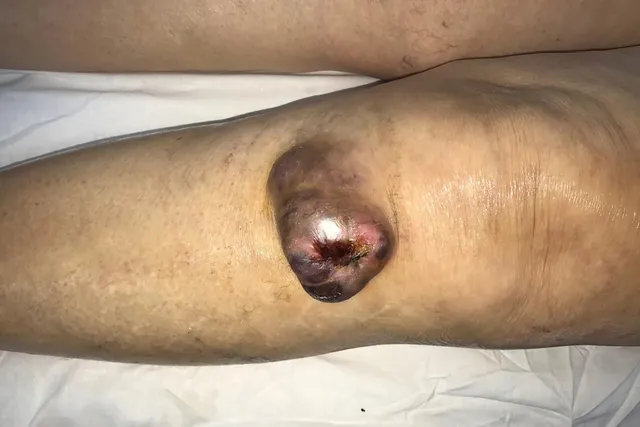
Tenosynovial giant tumors (TGCTs) are rare growths that affect your joints. They are usually benign, which means the growths aren't cancerous.
The most common treatment for TGCT is surgery, but it's not always the right choice. Your doctor might recommend a different treatment.
Are There Other Treatments for Tenosynovial Giant Cell Tumors?
There are some situations when surgery is not the best way to treat TGCT. Here are some reasons to think about other options:
- Other health conditions sometimes mean higher risks for surgery, and other treatments may fit better.
- It might be hard to reach the tumor, or surgery could damage surrounding tissue.
- There may be a higher risk of joint stiffness and limitations, especially on weight-bearing joints.
- The tumor keeps coming back (is recurrent).
When this happens, your doctor may want to try a medication.
Which Medications Treat Tenosynovial Giant Cell Tumors?
Doctors can use some medicines to shrink your TGCT, called targeted therapies. The medications block the colony stimulating factor-1 (CSF-1) receptor protein, which kills the TGCT cells. These medicines are called CSF-1R inhibitors.
Vimseltinib (Romvimza)
The FDA approved vimseltinib to treat TGCT. This medicine may raise your risk of liver injury, so your doctor will monitor your liver health during treatment.
Pexidartinib (Turalio)
In 2019, pexidartinib was approved to treat adults with a TGCT. It was the first FDA-approved drug for this type of tumor. Pexidartinib is only available only under a restricted distribution program called Turalio REMS (Risk Evaluation and Mitigation Strategy).
This means your doctor has special training and certification to prescribe pexidartinib. That way, they can monitor your liver during treatment to prevent fatal liver damage.
Pexidartinib comes in a capsule that you take by mouth, usually twice a day. You shouldn't open the capsule. If you have trouble swallowing it, speak to your pharmacist and doctor. They may have some ideas to help you, or you may have to switch treatments.
Do not eat grapefruit or drink grapefruit juice while on pexidartinib, and avoid antacids two hours before and two hours after your dose.
CSF-1R inhibitor interactions
Just like many medicines, CSF-1R inhibitors can interact with other medications. There are several medicines that you may need to skip or should be taken with caution if you're taking vimseltinib or pexidartinib.
So make a list and tell your doctor about all the medicines and supplements that you're taking beforehand. The list is long, but here are a few medicines that can interact:
- Carbamazepine
- Clarithromycin
- Diltiazem
- Erythromycin
- Fluconazole
- Methotrexate
- St. John's wort
- Valproic acid
- Verapamil
Imatinib (Gleevec)
Imatinib is approved to treat certain types of cancer, such as leukemia. Some doctors use it to treat TGCT, also called "off-label" use. Like pexidartinib, imatinib interacts with many medications, so be sure your doctor is aware of all medications and supplements you take before starting treatment.
You take imatinib once a day, but don't crush or break the pill, especially with your bare hands. If you do touch a crushed pill, wash your hands right away with soap and water to prevent problems. If you have trouble swallowing it, ask your pharmacist if you can dissolve the pill in a glass of water or apple juice. But skip grapefruit and the juice while taking imatinib because they may interact.
Nilotinib (Tasigna)
Nilotinib is a leukemia drug used off-label to treat TGCT. It comes in a capsule. Try not to break or crush it, as the medicine can irritate your skin. If you have problems swallowing the capsule, ask your pharmacist if you can sprinkle it on some applesauce. But that's not recommended for other foods.
Clinical trials
These studies find out if new medicines work to treat TGCT. In fact, vimseltinib clinical trials are looking at how safe the medicine is over time. If you want to know more about clinical trials, ask your doctor about possible studies.
Does Radiation Therapy Treat Tenosynovial Giant Cell Tumors?
Although radiation works to shrink tumors before surgery, doctors don't usually suggest it to treat TGCTs. There aren't many studies to prove that radiation is helpful for TGCT because the condition is so rare.
Without good studies to be sure, experts aren't sure if getting radiation may cause more problems. Doctors sometimes treat TGCTs with external beam radiation and radiosynoviorthesis, a type of radiation treatment that's injected into your tumor. Research shows this treatment can raise your risk of serious problems like getting arthritis at an earlier age and osteonecrosis (when bone tissue dies because of a lack of blood). But without larger studies, it's unclear if these treatments work.
Radiation treatment can raise your risk of problems such as:
- Joint stiffness
- Joint damage
- Thicker joint tissue or scar tissue (fibrosis)
- Cancer after radiation exposure
Embolization
Tumor embolization, a procedure where a doctor blocks a blood vessel so it can't supply a tumor with oxygen and nutrients, causes some tumors to stop growing, shrink, or die. It is another option for some people with TGCT. Your doctor may choose a tumor embolization if you can't have surgery.
Watchful Waiting
If you have diffuse TGCT and no symptoms, watchful waiting or active surveillance is another choice. Different types of tumors and cancers use this type of monitoring to catch changes early.
If your doctor suggests watchful waiting, you won't be getting any active treatment, like medications. But you will be watched closely to see if your tumor changes or grows. This means you'll see your doctor regularly for visits and tests.
Over 50% of people with TGCTs get them again in their lifetime. So no matter what type of treatment you decide on, there is a good chance the tumor will come back. Regular follow-ups with your doctor can help you find them in the earlier stages.
Show Sources
Photo Credit: iStock/Getty Images
SOURCES:
American Cancer Society: "Targeted Therapy," "Getting External Beam Radiation Therapy."
Cancer Treatment Reviews: "Best clinical management of tenosynovial giant cell tumour (TGCT): A consensus paper from the community of experts."
Cleveland Clinic: "Tenosynovial Giant Cell Tumor."
European Journal of Surgical Oncology: "Active surveillance of diffuse-type tenosynovial giant cell tumors: A retrospective, multicenter cohort study."
Frontiers in Immunology: "Update on Tenosynovial Giant Cell Tumor, an Inflammatory Arthritis With Neoplastic Features."
Journal of Health Economics and Outcomes Research: "Surgical Treatment Patterns, Healthcare Resource Utilization, and Economic Burden in Patients with Tenosynovial Giant Cell Tumor Who Underwent Joint Surgery in the United States."
Mayo Clinic: "Pexidartinib (Oral Route)," "Imatinib (Oral Route)," Nilotinib (Oral Route)."
Memorial Sloan Kettering Cancer Center: "MSK ASCO 2024 Research Roundup: Practice-Changing Advances in Head and Neck Cancer, Tenosynovial Giant Cell Tumor, Kidney Cancer, Lung Cancer, and More."
National Cancer Institute: "Imatinib Mesylate," "Watchful waiting," "Embolization."
Nationwide Children's: "What Are Tenosynovial Giant Cell Tumors?"
OrthoInfo: "Giant Cell Tumor of the Bone."
TGCT Support: "Medication," "Imatinib."
FDA: "FDA approves pexidartinib for tenosynovial giant cell tumor," "REMS Prescriber Certification Requirements."
UpToDate: "Treatment for tenosynovial giant cell tumor and other benign neoplasms affecting soft tissue and bone."