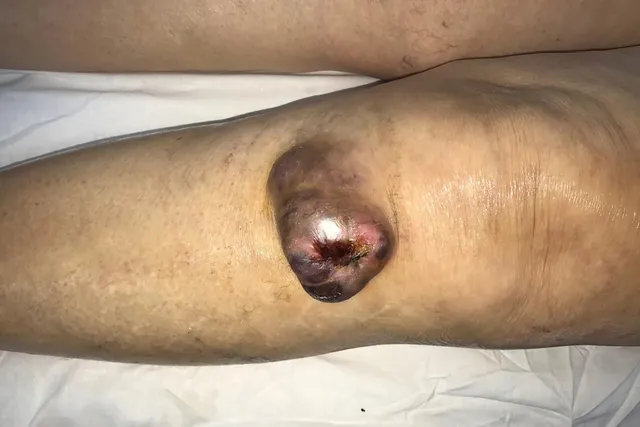
Tenosynovial giant cell tumors (TGCTs) are tumors that affect your joints. They are rare and usually benign, which means the growth is not cancer. That said, even benign tumors can cause damage as they grow and put pressure on surrounding tissues. This is why you might need treatment.
Your tumor can be localized or diffuse. Localized TGCTs stay inside your smaller joint and tend to grow slowly. Most often, localized TGCTs affect your hand or toes. Some doctors may call localized TGCTs nodular TGCTs (N-TGCTs) instead of localized. It's the same thing, just a different name.
Diffuse TGCTs grow quickly and spread beyond the joint. The most common joint affected by diffuse TGCTs is the knee, but they can occur in other large joints too.
If you don't have symptoms, your doctor might talk about "active surveillance" or "watchful waiting" at first. Active surveillance means that you won't get any treatment. Instead, you will be watched closely, with regular office visits and tests to check to see if the tumor grows.
If your TGCT does grow and cause symptoms, such as damage to surrounding tissue, you and your doctor will decide on treatment. Localized TGCTs and diffuse TGCTs are treated differently because of where they are and the risk of them coming back.
Find out how TGCTs are treated and the risks that can come with each type of treatment.
TGCT Surgery
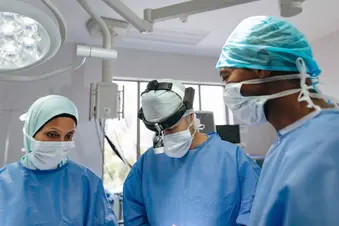
Surgery is the most common treatment, but there are other options for diffuse TGCTs. The procedure removes the TGCT as well as any damaged joint lining. If needed, the surgeon also repairs damage to your tendons and ligaments.
Types of TGCT surgery
Surgery for localized tumors works fairly well – only about 10% to 15% of the tumors come back (recur) after they are removed. Unfortunately, diffuse TGCT surgery isn't as successful because more than half (50% to 70%) come back after they are removed. And most diffuse TGCTs (88%) come back after repeat surgery.
Arthroscopy. Since localized TGCT is limited to inside the joint, an orthopedic surgeon might choose to do arthroscopic surgery. It can also be done for diffuse TGCT in some cases. An arthroscopy is a minimally invasive surgery because the surgeon makes very small cuts instead of a big one. One tiny cut is for a camera that sends images to a screen. This allows the surgeon to see inside the joint. The other cuts are for special tools used to remove the tumor.
When possible, surgeons often choose arthroscopies because they usually have a shorter recovery time and you don't need to be in the hospital for as long.
Joints that are often operated on by arthroscopy are the:
- Shoulder
- Elbow (if in an expert center)
Open surgery. The procedure that most people probably think about when they're told they need surgery is open surgery. An open surgical procedure involves your surgeon making a larger cut where they will operate. This is so they can see inside the joint and use larger surgical instruments to remove the tumor and repair tissue damage.
Joints with localized TGCT that would likely be treated through an open surgery are:
- Hip
- Ankle
- Elbow (if not in an expert center)
- Knee
In some cases, particularly if the tumor is in the back of the knee, a surgeon may choose to use both arthroscopy and open approach.
If you have diffuse TGCT, your surgeon will probably recommend surgery, especially if it's in a big joint like your hip. This is because it can be hard to access the tumor, and the surgery would involve more than just removing the tumor from the joint, but probably some of the lining, too. Your surgeon might also have to repair damage caused by the tumor.
Joint replacement. If your joint has been permanently damaged because of advanced TGCT, you might need a total arthroplasty – a joint replacement. This is major surgery that could be for either localized or diffuse TGCT.
Recovery from a joint replacement surgery involves a significant rehabilitation process so you can use the joint again. Rehabilitation usually includes physical therapy. Your physical therapist will give you exercises to do so you can get a good range of motion with your joint and the muscles around the joint can become stronger and support it.
Even if your joint is replaced, there's still a chance that the TGCT can recur, so your doctor will have to monitor you to see if this happens. The most common joint replacement surgeries are for hips and knees, but other joints can be replaced too:
- Ankle
- Wrist
- Shoulder
- Elbow
Medication for TGCT
If surgery isn't an option to treat your TGCT, or if you had surgery and it wasn't successful, your doctor might recommend that you take medication to shrink the tumor or keep it from growing larger. This treatment, called systemic treatment, is more common for diffuse TGCT for two reasons:
- Diffuse TGCTs have a higher rate of recurrence.
- Diffuse TGCTs go beyond the joint into other surrounding tissue, making them hard to remove completely.
Pexidartinib (Turalio) and vimseltinib (Romvimza) are medications specifically approved for treating TGCT. Both are fairly effective.
Two other drugs, imatinib (Gleevec) and nilotinib (Tasigna), are also used by some doctors to treat diffuse TGCT in order to successfully shrink the tumors. They are used "off label" because while they are approved to treat some types of cancer, they haven't been approved by the FDA to treat TGCT.
Other treatments for TGCT
Doctors have tried to use radiation therapy to shrink diffuse TGCTs, but research shows that it doesn't work very well. Doctors also worry that the long-term risks outweigh any possible benefits, so it's not used very often.
Which Type of TGCT Is More Challenging to Treat?
Diffuse TGCT is the more challenging type of TGCT to treat. That's because localized tumors are easier to remove with surgery and have a lower chance of coming back. So the chances of you needing more treatment are lower. Diffuse TGCTs are more difficult to treat surgically and have a higher recurrence rate.
Diffuse TGCTs also tend to affect your larger joints, most often the knee. The knee, hip, and ankle are weight-bearing joints that affect how you can stand and move, so treatment not only focuses on removing the tumor but also keeping you as mobile as possible.
The medications to treat diffuse TGCTs also can make them harder to treat. The medications interact with several other drugs, and if you're taking one (or more), your doctor might not be able to give you a TGCT medication.
These drugs can also cause some serious side effects, which could mean that you might not be able to tolerate them. Everyone is different, so your doctor designs your treatment for your specific situation. Speak with your doctor and care team about your treatment plan. They can help give you the best chances of success.
Show Sources
Photo Credit: iStock/Getty Images
SOURCES:
Cancer Treatment Reviews: "Best clinical management of tenosynovial giant cell tumour (TGCT): A consensus paper from the community of experts."
European Journal of Surgical Oncology: "Active surveillance of diffuse-type tenosynovial giant cell tumors: A retrospective, multicenter cohort study."
Journal of the American Academy of Orthopaedic Surgeons Global Research and Reviews: "Management of Tenosynovial Giant Cell Tumor: A Neoplastic and Inflammatory Disease."
Mayo Clinic: "Pexidartinib (Oral Route)."
National Organization for Rare Disorders: "Tenosynovial Giant Cell Tumor."
Nationwide Children's: "What Are Tenosynovial Giant Cell Tumors?"
OrthoInfo: "Total Joint Replacement."
TGCT Support: "Radiation," "Surgery."
FDA: "FDA approves pexidartinib for tenosynovial giant cell tumor."
UpToDate: "Treatment for tenosynovial giant cell tumor and other benign neoplasms affecting soft tissue and bone."