
What Are IL Inhibitors?
Interleukin (IL) inhibitors are drugs that work by blocking inflammatory substances in your body known as interleukins. Medicines in this drug class are in use for many inflammatory conditions, including atopic dermatitis. They ease the disease and its symptoms by interrupting key signals in your body that drive the damaging immune response and inflammation.
IL inhibitors also belong to a class of drug known as biologics. Biologics are made of substances that come from living cells. IL inhibitors are what’s known as monoclonal antibodies. IL inhibitor monoclonal antibodies are proteins that are specifically designed to bind certain interleukins to treat atopic dermatitis and other conditions that are driven by this inflammatory signal.
Which IL Inhibitors Are Used to Atopic Dermatitis?
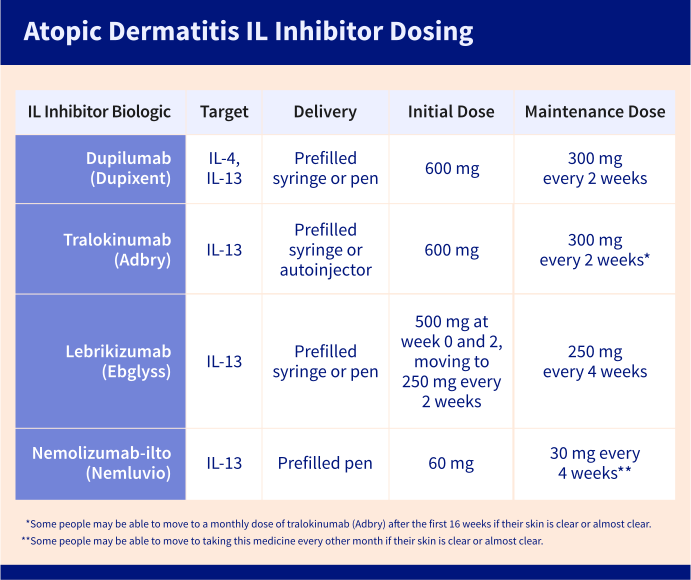
IL inhibitors approved by the FDA target IL-13, IL-4, and IL-31. The ones that are used to treat atopic dermatitis include:
How Do IL Inhibitors Work?
IL inhibitors work by binding to and blocking the action of one or more interleukins. Interleukins are pro-inflammatory substances known as cytokines. Many different types of cells in your body make interleukins. Your body makes dozens of interleukins, each with slightly different roles.
Interleukins play important roles in activating your immune responses in response to invading pathogens or infections. But they also can drive damaging inflammatory immune responses in autoimmune conditions to cause the itchy, red patches you get when you have atopic dermatitis. So IL inhibitors treat atopic dermatitis by targeting specific interleukins that drive the underlying inflammation. Most IL inhibitors for atopic dermatitis target interleukins 4 and 13 (IL-4 and IL-13).
IL inhibitors work in slightly different ways based on which interleukins they target:
- Dupilumab (Dupixent) targets IL-4 and IL-13
- Lebrikizumab (Ebglyss) targets IL-13
- Nemolizumab-ilto (Nemluvio) targets IL-31
- Tralokinumab (Adbry) targets IL-13
All these interleukins play different roles in atopic dermatitis.
IL-4 is involved early in the immune response that leads to atopic dermatitis.
IL-13 becomes more important later, causing inflammation, itch, and skin damage.
IL-31 has been shown to play an important role in the itch-scratch cycle.
IL inhibitor biologics disrupt these various interleukin signals by binding to cell surface receptors that would otherwise receive them.
When Are IL Inhibitors Used to Treat Atopic Dermatitis?
IL inhibitors can be safer to use than general immunosuppressants because they act so specifically. But you’re more likely to take an IL inhibitor for atopic dermatitis when other treatments, including topicals, don’t work.
They’re approved for moderate to severe atopic dermatitis, so you wouldn’t take a biologic IL inhibitor to treat atopic dermatitis that’s more mild. Experts still consider moisturizers and topical steroids to be mainstays of atopic dermatitis treatment. You may also try targeted topical treatments, such as calcineurin inhibitors, or phototherapy before moving on to systemic treatments, including IL inhibitor biologics or oral JAK inhibitors.
How Long Do You Take IL Inhibitors?
You’d take an IL inhibitor long term if it’s working for your atopic dermatitis. While the doses vary depending on which IL inhibitor your doctor prescribes, you’ll start with a higher initial dose. You may also need to take it more often at first. Once the medicine has begun working, you’ll move to a lower maintenance dose, usually injected either every other week or once a month.
How Effective Are IL Inhibitors?
Evidence showing how well IL inhibitors work for moderate-to-severe atopic dermatitis come from the results of clinical trials. They’re based on studies in large numbers of patients showing how well it works on average. They can give you an idea how likely it is these medicines will work for you or how well they may work for you. But everyone is different, so your experience may differ from that of someone else.
To measure how well a treatment for atopic dermatitis is working, researchers use different tools including the Investigator Global Assessment (IGA) and the Eczema Area and Severity Index (EASI)-75. These rate the severity at a set time and improvement with treatment.
Are IL Inhibitors Safe?
IL inhibitors are generally considered safe. Because they act on the immune system specifically, they may be safer than medicines that suppress the immune system as a whole. Most side effects or adverse events in clinical trials were mild or moderate, including upper respiratory infections, conjunctivitis, and injection site reactions.
While some IL inhibitors have black box warnings indicating serious risks, the IL inhibitors targeting IL-4, IL-13, and/or IL-31 that are approved for atopic dermatitis do not. Ask your doctor about any serious side effects or health risks associated with taking any of these medicines if you’re concerned.
What Are the Common Side Effects of IL Inhibitors?
IL inhibitors are generally safe, but you may have some side effects, depending on which one you are taking. Common side effects of dupilumab include:
- Cold sores
- Eye problems (Pink eye, dry eyes, herpes infection that infects the eyes)
- Joint pain
- Pain or redness where the needle went in your skin
- Sore throat
- Trouble sleeping
- Dizziness
- Diarrhea
- Upper respiratory problems
Common side effects of tralokinumab include:
- Aches and pains
- Burning, dry, or irritated eyes
- Chills
- Coughing
- Discharge or watery eyes
- Stuffy ears
- Fever
- Headache
- Losing your voice
- Red, painful, or swollen eyes or eyelids
- Cold-like symptoms
- Trouble breathing
- Feeling tired or weak
Common side effects of lebrikizumab include:
- Burning, dry, or itchy eyes
- Discharge or watery eyes
- Red, painful, or swollen eyes or eyelids
Common side effects of nemolizumab-ilto include:
- Headache
- Skin rashes
Let your doctor know or get help immediately if you have:
- Signs of an allergic reaction, including breathing problems, swelling, or fainting
- Eye pain, discharge, or vision changes
- Weakness or fatigue
- Fever
- Severe headache
- Skin rash
- Loss of appetite
- Pain
- Tingling or numbness in hands or feet
- Irregular heartbeat
- Sudden dizziness
- Fainting
Talk to your doctor about what side effects they typically see in people taking the IL inhibitor you’re prescribed. Ask them when to call and what’s the best way to get in touch with any concerns.
Who Should Not Take IL Inhibitors?
You shouldn’t take an IL inhibitor if you’re allergic or hypersensitive to them. IL inhibitors don’t have any other restrictions for use. But they haven’t been tested in people with various other health conditions.
It also isn’t known whether IL inhibitors can cause harm to a fetus during pregnancy. The amount of IL inhibitor in breast milk is likely to be low. If an infant were to receive any of these monoclonal antibody proteins in breast milk, they also would break down in their stomachs. But any effects of IL inhibitors in breast milk aren’t known.
How Much Do IL Inhibitors Cost?
Biologics including IL inhibitors are costly medicines. For example, the lifetime cost of dupilumab for atopic dermatitis has been estimated at over $500,000. The list price for a single dose is about $4,000.
The amount that any particular medicine will cost you out-of-pocket will depend on your health insurance plan and prescription drug coverage. It’s always a good idea to check with your insurance plan first to see which treatments they’ll cover and if you need a preauthorization. If your insurance denies coverage, you can file an appeal.
If out-of-pocket costs are a concern, ask your doctor about financial assistance programs that may be available through the drug companies. You may be eligible for a copay assistance program that offers qualified insured people a cost as little as $0.
Clinical Trials of Biologics for Atopic Dermatitis
Some studies are looking at other types of biologics for treating atopic dermatitis. For example, an ongoing study is testing a biologic called amlitelimab for people with moderate-to-severe atopic dermatitis that didn’t get help from another biologic therapy or a JAK inhibitor.
This biologic works in a new way to target persistent inflammation. Other biologics to target inflammation in different ways are in development, so you should expect the list of IL inhibitors and biologics for atopic dermatitis to grow.
Is an IL Inhibitor Right for Me?
You’ll have many options to choose from to treat your moderate-to-severe atopic dermatitis. While that’s great news, it can make it harder to know which treatment plan or medicine to choose. Talk to your doctor about your concerns and preferences to help you find the plan that’s most likely to work for you.