
What Are JAK Inhibitors?
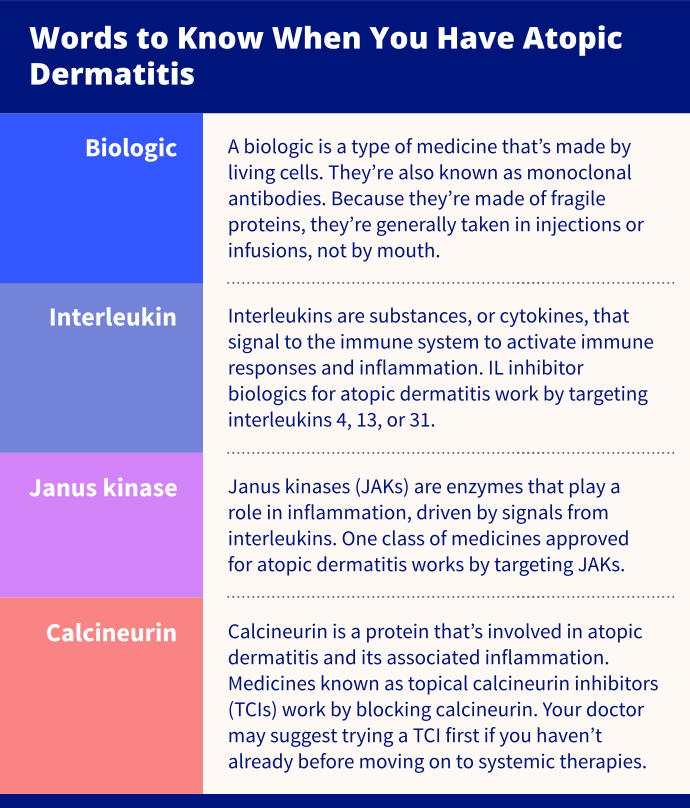
Janus kinase (JAK) inhibitors are targeted medicines that block a specific signal in your body. This signal plays an important role in inflammation and other symptoms of atopic dermatitis and other skin conditions. Medicines in this drug class treat atopic dermatitis by interrupting key inflammatory signals that activate immune responses to cause the irritation and itch that comes with this disease.
Which JAK Inhibitors Are Used to Treat Atopic Dermatitis?
Your dermatologist may suggest you try a JAK inhibitor to relieve symptoms of atopic dermatitis. Here are JAK inhibitors that are used to treat atopic dermatitis.
How Do JAK Inhibitors Work?
JAK inhibitors target or block protein enzymes known as Janus kinases or JAKs for short. JAK enzymes play many roles in the body. They are important for cell growth, survival, development, and cell identity. They’re especially important in the immune system. JAK inhibitors are drugs designed to control autoimmune conditions, including atopic dermatitis, through effects on this pathway.
JAKs include a family of related enzymes. There are four of them:
- Janus kinase 1 (JAK1)
- Janus kinase 2 (JAK2)
- Janus kinase 3 (JAK3)
- Tyrosine kinase 2 (Tyk2)
These enzymes receive signals that drive inflammation. When you have atopic dermatitis, an excess of substances that drive this inflammatory pathway causes your immune system to overreact. As a result, you get the red, inflamed, and itchy patches that come with this skin condition.
JAK inhibitors work in slightly different ways based on which JAK enzymes they target:
- Abrocitinib (Cibinqo) targets JAK1
- Baricitinib (Olumiant) targets JAK1 and JAK2
- Ruxolitinib (Opzelura) targets JAK1 and JAK2
- Upadacitinib (Rinvoq) targets JAK1
Another major difference among JAK inhibitors is where they work. Most of the JAK inhibitors are taken by mouth to work throughout your body. But ruxolitinib (Opzelura) is a topical JAK inhibitor cream that you spread on your skin.
When Are JAK Inhibitors Used to Treat Atopic Dermatitis?
An oral JAK inhibitor may be an option for treating atopic dermatitis that is moderate or severe in adults or kids 12 and up. Your doctor may suggest a JAK inhibitor if other topical or systemic treatments for atopic dermatitis didn’t work or have stopped working. Oral JAK inhibitors come with more risks than other treatment options.
The topical JAK inhibitor ruxolitinib (Opzelura) is approved for people aged 12 and up for mild to moderate atopic dermatitis.
How Do You Take JAK Inhibitors?
You’ll put ruxolitinib (Opzelura) on your affected skin twice each day.
You’ll take any of the oral JAK inhibitors once a day. Baricitinib (Oluminat) comes in a 2-milligram or 4-milligram tablet. You’ll usually take 4 milligrams each day.
You’ll start taking upadacitinib (Rinvoq) at a dose of 15 milligrams once each day. If this starting dose doesn’t work well enough, your doctor may suggest doubling the dose.
The recommended dose of abrocitinib (Cibinqo) for moderate-to-severe atopic dermatitis is 100 milligrams. Your doctor may suggest increasing the dose to 200 milligrams if the lower dose doesn’t give you relief.
Ask your doctor what you should do if you miss a dose or don’t take it on time. In general, if you've missed a dose, you should wait until your next dose. You shouldn’t take more than the recommended dose.
How Long Do You Take JAK Inhibitors?
You can use ruxolitinib (Opzelura) regularly for up to eight weeks. You also may use it for longer if you’re using it less often.
Oral JAK inhibitors are medicines that you’d keep taking. You wouldn’t plan to stop taking them after a set period. If you’re taking a JAK inhibitor for the first time, your doctor may want to see you after eight weeks to see how well it’s working. If it isn’t working after a few months, they may consider adjusting the dose or switching to another treatment.
How Effective Are JAK Inhibitors?
Evidence about how well medicines including JAK inhibitors work comes from studies of participants in clinical trials. They give you an idea how well these medicines work. But everyone is different, and your experience may differ.
To measure how well a treatment for atopic dermatitis is working, researchers use different tools including the Investigator Global Assessment (IGA) and the Eczema Area and Severity Index (EASI)-75. These rate the severity at a set time and improvement with treatment.
Are JAK Inhibitors Safe?
JAK inhibitors are safe enough to use, but they do come with risks. Because oral JAK inhibitors target the immune system, they can come with more risk for infections. Your ability to fight infections should come back if you stop taking them.
Topical JAK inhibitors are generally safe to use as prescribed. But they may come with more risk for skin cancer or infections.
While some IL inhibitors have black box warnings indicating serious risks, the IL inhibitors targeting IL-4, IL-13, and/or IL-31 that are approved for atopic dermatitis do not. Ask your doctor about any serious side effects or health risks associated with taking any of these medicines if you’re concerned.
What Are the Common Side Effects of JAK Inhibitors?
It can be scary to start a new medicine. Ask your doctor about any questions you have and share your concerns. Ask your doctor about which side effects you should watch for, when to call, and whether you have any special concerns based on your general health. Here are some common side effects of JAK inhibitors:
- Colds
- Bronchitis
- Ear infection
- Urinary tract infections
- Headache
- Nausea
More rarely, people have had more serious side effects, including:
- Blood clots
- Pneumonia
- Tuberculosis
Oral JAK inhibitors come with a black box warning that they may cause:
- Serious infections, leading to hospitalization
- Mortality
- Cancer, including lymphoma and lung cancer
- Major heart events
- Blood clots
Who Should Not Take JAK Inhibitors?
Ask your doctor if a JAK inhibitor could help you if other treatments for atopic dermatitis aren’t working. You shouldn’t take a new JAK inhibitor if you are:
- Already taking a JAK inhibitor
- Are taking a biologic
- Are taking immunosuppressants such as oral steroids
You also shouldn’t take a JAK inhibitor if you are:
- Allergic or hypersensitive to them
- Have an active, serious infection
- Have perforations in your digestive or gastrointestinal (GI) tract
- Have abnormal blood test results, such as changes in blood counts, liver enzymes, or lipids
- Are pregnant or want to get pregnant
- Are breastfeeding
- Have severe liver damage
How Much Do JAK Inhibitors Cost?
Oral JAK inhibitors are costly medications. Their list price can be tens of thousands of dollars. The amount that any particular medicine will cost you out-of-pocket will depend on your health insurance plan and prescription coverage. It’s always a good idea to check with your insurance plan first to see which treatments they’ll cover and if you need a preauthorization.
If costs are a concern, ask your doctor about financial assistance programs. For example, the list price for a tube of Opzelura is about $2,000. However, your cost will depend on your insurance coverage and whether you are eligible for a copay savings program from the company.
Clinical Trials of JAK Inhibitors for Atopic Dermatitis
Studies to understand the long-term effects of approved and new JAK inhibitors are underway. Some studies are looking at JAK inhibitors in combination or to see how they work in people of different age groups. Other JAK inhibitors are in development, so you should expect the list of JAK inhibitors for atopic dermatitis to grow.
How to Find Out About Clinical Trials
If you’re interested in participating in a clinical trial or exploring those that may be ongoing near you, visit ClinicalTrials.gov. Search for trials of JAK inhibitors for atopic dermatitis. You can focus your search based on:
- Where you live
- Whether it’s enrolling
- Sex
- Age
- Study phase
- Study type
Is a JAK Inhibitor Right for Me?
You’ll have lots of options to treat atopic dermatitis today. While that’s a good thing, it can make it harder to make treatment decisions. This recap of key factors to consider may help you in talking with your doctor and deciding together on a treatment plan and what to do next.