
Atopic dermatitis (AD), also known as eczema, affects close to 1 in 10 adults. It is common in younger people, too. Atopic dermatitis is a chronic condition you may have struggled with all your life.
While your symptoms may appear limited to the skin, the intense cycle of itching, scratching, and rash also can have serious implications for your ability to enjoy life.
Some basic and familiar steps you can take at home to help with the discomfort of atopic dermatitis and its flares include:
- Cold compresses or ice packs
- Petroleum jelly
- Moisturizing creams
- Bleach baths
- Wet wrap therapy
- Avoiding triggers
Older treatment options also include broad-spectrum anti-inflammatories including:
- Topical corticosteroid creams
- Light therapy (phototherapy)
- Oral pills such as azathioprine, cyclosporine, methotrexate, mycophenolate, and prednisone
Until relatively recently, your atopic dermatitis treatment options were limited to these. They also weren’t specific in targeting the underlying causes of your skin flares as needed to allow long-term healing.
For too many people with moderate to severe atopic dermatitis, it wasn’t enough. While oral steroids can improve the skin symptoms, atopic dermatitis often flares when treatment is stopped. Systemic steroids also come with many side effects when taken long-term.
The goal of treating your atopic dermatitis is to ease your dry skin, reduce skin inflammation, and stop future flares. Today, you’ll have more cutting-edge and targeted options you can use topically or take systemically to address and reduce the underlying inflammatory responses and help you find relief.
What Are the Latest Treatments for Atopic Dermatitis?
A growing number of more targeted treatment options are now approved for treating atopic dermatitis in adults. Some of them also are approved for young children or teens.
Targeted treatment options include pills, topical creams, and injected or infused biologics. You’ll likely use them in combination with moisturizing creams and other basic measures to protect and care for your skin. Biologics are lab-made drugs that are exact copies of proteins taken from living cells or tissues. They can block chemical signals that happen in an atopic dermatitis flare.
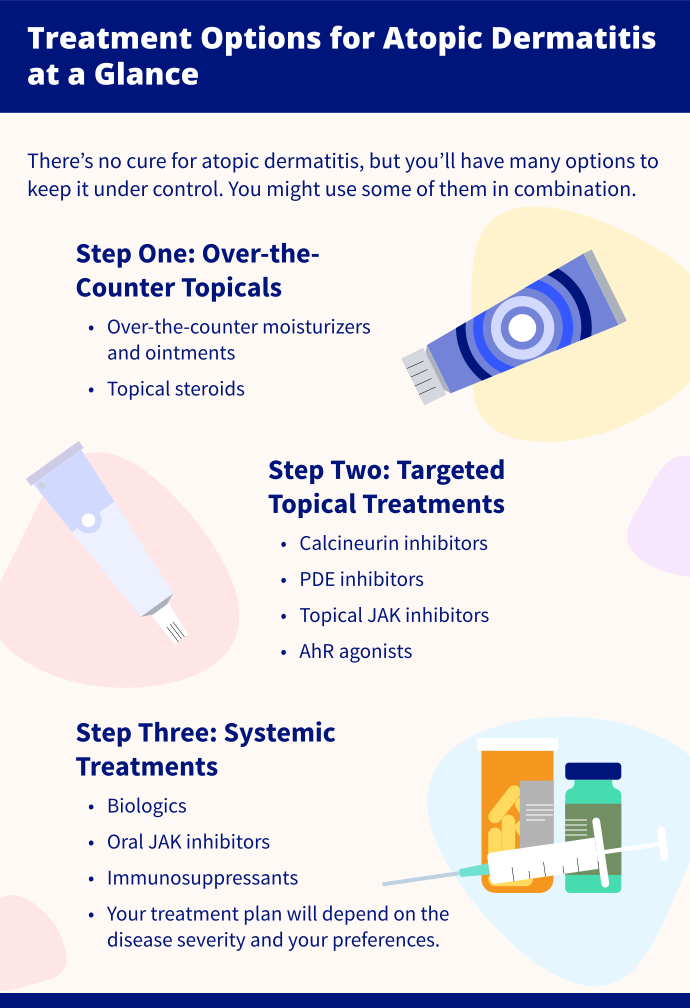
Your newer treatment options include different drug classes that work in different ways to affect your immune system:
All of these medicines are "targeted.” That means that they work by blocking a particular substance or molecule to tamp down your immune system and ease your atopic dermatitis. You’ll likely use them together with other strategies to avoid triggers and protect your skin.
To make informed treatment decisions together with your doctor, it will help you to understand how each of these medicines and drug classes works.
What Are IL Inhibitors?
IL is short for interleukin. Interleukins are a type of cytokine or chemical signal your cells make. They are important for communication to cells in your immune system.
They may signal immune cells to turn on or become more active. They also may cause immune cells to multiply, mature, move from one place to another or stick to certain spots. Interleukin proteins also drive inflammation and immune responses.
Atopic dermatitis is an immune condition in your skin. It’s driven mainly by interleukin cytokines. Two that are especially important in atopic dermatitis are IL-4 and IL-13. As a result, doctors consider IL-4 and IL-13 good targets for treating atopic dermatitis. IL inhibitors are medicines that work by blocking interleukins.
Learn more about IL inhibitors for atopic dermatitis.
What Are JAK Inhibitors?
JAK inhibitors work in a different way to limit inflammation in atopic dermatitis. Instead of targeting interleukins, they target proteins known as Janus kinases (JAKs).
JAKs receive signals from many different interleukins to drive inflammation. The JAK pathway is known to play a role in many immune-driven inflammatory conditions, including atopic dermatitis.
Some JAK inhibitors are taken by mouth as a pill. But the JAK inhibitor ruxolitinib is a topical treatment that works in the same targeted way for treating mild to moderate atopic dermatitis in people 2 and up.
Learn more about JAK inhibitors for atopic dermatitis.
What Are PDE Inhibitors?
PDE inhibitors are another topical option for atopic dermatitis, especially when it’s more moderate or mild. They’re called PDE inhibitors because they block an enzyme called phosphodiesterase 4 (PDE4).
The PDE inhibitor crisaborole (Eucrisa) is approved for adults and kids. Roflumilast (Zoryve) is a cream that works in the same way.
You’ll use PDE inhibitor creams once or twice daily. It’s approved for adults and kids aged 2 and up, based on evidence it’s effective for many people with mild or moderate atopic dermatitis. Eucrisa ointment is OK for kids 3 months and up. PDE inhibitors may be less likely to work if your atopic dermatitis is more severe.
What Are AhR Agonists?
AhR stands for aryl hydrocarbon receptor. It’s a topical treatment for atopic dermatitis that works by activating this receptor. When this receptor is activated, it helps to reduce inflammation. It also increases the activity of proteins that are important for your skin barrier to work well.
Tapinarof (Vtama) is the only medicine in this class. It was first approved to treat plaque psoriasis. Its approval was extended to atopic dermatitis based on evidence it could treat people with moderate to severe AD, including people of all skin types and ages.
What Are Topical Calcineurin Inhibitors (TCIs)?
Calcineurin inhibitors are an older type of topical treatment for atopic dermatitis. You’ll have two calcineurin inhibitors to choose from: pimecrolimus cream or tacrolimus ointment. TCIs work by blocking a protein called calcineurin that’s involved in inflammation. If topical corticosteroids don’t work or stop working, your doctor may suggest trying this before moving on to other options.
Things to Consider When Choosing a Treatment
There is a lot to think about when choosing a treatment for your atopic dermatitis. See a dermatologist with experience treating moderate to severe atopic dermatitis for advice if you haven’t already.
Treatment approaches for this skin condition will depend on how severe your atopic dermatitis is.
Your doctor can help you come up with a treatment plan that suits you best. It may include steps to avoid things that trigger your flares.
Some common triggers include allergens, food allergies, skin irritants, sweat, and stress. Over-the counter medicines, creams, and ointments may help, too. Especially when atopic dermatitis is moderate to severe, you shouldn’t stop there.
Your doctor can help you understand the severity based on how much of your body is affected, how intense the redness and swelling is, how itchy it is, and how much it’s affecting your ability to sleep and mental health.
Talk to your doctor about your treatment options to get your atopic dermatitis under good control and help to prevent future flare-ups.
Many prescription treatment options work by blocking the immune responses that drive atopic dermatitis flares in different ways. Some of them are more specific than others and side effects also will vary.
Some key factors to consider and talk with your doctor about include:
- How much of your body is affected
- How intense the inflamed patches are on your skin
- How bothersome the itchiness or other symptoms are
- Your treatment preferences, for instance whether you’d prefer a topical, oral medicine, or biologic
- How well other treatments, such as topical corticosteroids, are working
- Your health insurance coverage
- Treatment side effects and risks for complications
Before adjusting your current treatment plan, your doctor may:
- Make sure you have the right diagnosis
- Consider any other health conditions you have
- Make sure you are well informed about atopic dermatitis and basic skin care
- Address ways to avoid any known triggers
- Make sure you’ve been following your current treatment plan
- Encourage you to use moisturizer at least once every day
Moisturizers and topical steroids are still considered mainstays of treatment for atopic dermatitis. Your doctor will likely advise you to keep using them even if you try other medicines. You’re most likely to move on to systemic treatments, including IL inhibitors or JAK inhibitors, when other topical therapies aren’t working.
Be sure to talk to your doctor about any concerns you have and ask questions to find a treatment plan that’s more likely to be effective for you.
Factors that can affect your ability to stick with treatment include:
- Frustration
- Inconvenience
- Side effects
- Forgetfulness
- Financial concerns
- Distrust
- Lack of understanding