Obstructive sleep apnea (OSA) is on the rise. By 2050, 76.6 million people in the U.S. could be diagnosed with this condition. OSA is a lot more complex and serious than occasional snoring. If you have OSA, your airway gets blocked when you sleep and causes you to stop breathing. This can raise your risk of multiple, and sometimes life-threatening, health issues.
“Untreated OSA is strongly linked to increased cardiovascular risk, hypertension, and cognitive impairment,” says Alex Dimitriu, MD, a sleep medicine doctor and psychiatrist in Menlo Park, California. “Put more simply, poor sleep is terrible for your brain and your body, as well as your moods.”
When your doctor diagnoses you with OSA, they’ll likely suggest you start using a continuous positive airway pressure (CPAP) machine. Dimitriu says this portable device is the gold standard for treating the condition. “[A CPAP] provides additional air to support your airway and prevent it from collapsing during sleep,” he says.
When you wear a CPAP mask at night, pressurized air is sent into your nose to help keep your airway open. Different types of CPAP machines and masks are available, but using them can take some getting used to.
More than 40% of people need extra support at first. For instance, it’s common to have questions about how the CPAP machine works, wonder how much it's helping your symptoms, or need tips on how to make the mask comfortable enough so you wear it every night.
CPAPs and other supports can be effective treating OSA. You’ll play an important role in carrying out these treatments, so go into your appointments prepared with questions. Here’s what to ask:
“When will I see results?”
Once you start using a CPAP machine, you could see a decrease in some symptoms, like snoring or daytime tiredness, right away. But doctors advise giving it some time to work.
“It can take up to three or four months in some cases to adjust to therapy,” says Sarathi Bhattacharyya, MD, medical director of MemorialCare Sleep Disorders Center at Long Beach Medical Center in Long Beach, California.
Talk to your doctor about the results you can expect to see and when they think you’ll notice a difference. “It’s important to follow-up with your provider to ensure that your response to treatment is sufficient and any adjustments that may help improve your comfort and treatment effect are made in a timely manner,” Bhattacharyya says.
“What can you tell from my CPAP usage report?”
Ask your doctor to go over the data that your CPAP machine collects each night.
“This contains useful information about hours of use, pressure delivery, mask fit, and how effectively the machine is treating your sleep apnea,” Bhattacharyya says.
An important number to know is your apnea-hypopnea index (AHI).
- Apneas are when you stop breathing for at least 10 seconds.
- Hypopneas are shallow breathing episodes during sleep that decrease your airflow for at least 10 seconds. They can lead to choking, snoring, frequent wakeups, and dips in your blood-oxygen levels.
An AHI between 5 to 14 (meaning that you have 5 to 14 apneas and/or hypopneas per hour) means you have mild OSA. A moderate AHI score can range from 15 to 29. If your OSA is severe, your AHI may be 30 or higher.
Your CPAP will record how many events you have each night so your doctor can track your progress. Over time, you may see your AHI drop to a normal range of 5 or less, but your doctor can help you understand a reasonable goal for you.
“What do my symptoms mean?”
Let your doctor know about any symptoms that you’re still having, especially:
- Daytime sleepiness
- Sleep fragmentation (waking up several times each night)
- Not feeling refreshed when you wake up in the morning
These may mean that your OSA is still not under control.
“Loud snoring, pauses in breathing while asleep, and morning headaches are also signs of poor breathing and oxygenation during the night,” says Dimitriu.
Other symptoms can mean that you need tweaks to your CPAP equipment. For instance, waking up with a dry mouth could mean that you’re sleeping with your mouth open. You may benefit from a chin strap to help keep it closed. A stuffed up nose can signal that you need to adjust your CPAP machine’s humidity level.
“How can I get more comfortable with my CPAP?”
Using a CPAP machine every night is a big lifestyle change that can take some getting used to. One study found that wearing the mask made 84% of women and 44% of men feel claustrophobic. And if you feel anxious, you might not regularly use your machine.
“Inconsistent CPAP use is either related to poor efficacy or discomfort,” says Dimitriu. “Either the machine does not make much of a difference, or it's hard to wear. Both of these issues should be addressed with your sleep doctor.”
Some CPAP use each night is better than none at all, he says, but compliance is vital.
Ask your doctor for tips on getting more comfortable with your CPAP machine. For instance, you might practice wearing your mask while you’re awake or try some relaxation exercises after putting it on. Your doctor can also adjust the settings of your CPAP machine so it starts with low air pressure, then slowly ramps up.
“Lower pressures can be more comfortable, though less effective at treating sleep apnea,” Dimitriu says.
“What are other OSA treatments besides CPAP therapy?”
Along with a CPAP machine, your doctor might also consider OSA treatment like:
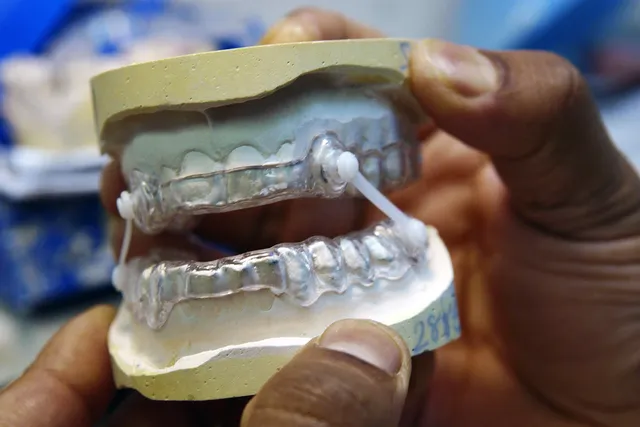
Oral appliances. For instance, a mandibular advancement device (MAD) is a device you put in your mouth before you go to bed. It keeps your airway open by pulling your lower jaw and tongue forward.
Oral appliances work best when you have mild to moderate sleep apnea. Sometimes they’re used along with a CPAP machine.
Positional therapy. A lot of people have sleep apnea when they sleep on their back, so special devices can help you sleep on your side. Doctors often recommend using positional therapy in combination with another OSA treatment.
Upper airway stimulation. The FDA has approved the Inspire device to treat some cases of OSA. A doctor puts it under your skin near your collarbone during an outpatient procedure. The tiny implant gently pulses at night to keep your airway open.
Surgery. In some cases, you could benefit from:
Nasal surgery, to widen your nasal passages and improve your airflow
Jaw surgery, which can move your lower and/or upper jaw to open up your airway
Mouth and throat surgery, to remove or reshape tissues or certain structures, like your tongue, to help you breathe better
Weight loss. “Weight loss via new GLP-1 agents can also help improve sleep apnea in people who are obese,” says Dimitriu. Tirzepatide (Zepbound) is the first GLP-1 drug that’s approved for the treatment of moderate to severe OSA. Your doctor will also encourage you to work on healthy habits, like eating less and exercising more. Weight loss surgery may also be an option.
Other lifestyle changes. For instance, your OSA could improve if you quit smoking and cut back on alcohol, especially before bed. Talk to your doctor if you need support to make lifestyle changes like these.
EDS treatments. If you’re using your CPAP regularly and still have excessive daytime sleepiness (EDS), your doctor could also prescribe a medication to help. That includes:
- Solriamfetol, an FDA-approved treatment for excessive sleepiness in adults with OSA
- Armodafinil and modafinil, traditional stimulants commonly used to increase wakefulness
- Pitolisant, a newer medication that releases neurotransmitters that help you feel more awake
It may take time to find the best way to treat your OSA and see results, but stick with it. OSA treatment can improve your physical and mental health, and your quality of life.
Show Sources
Photo Credit: E+/Getty Images
SOURCES:
Alex Dimitriu, MD, double board-certified in psychiatry and sleep medicine; founder, Menlo Park Psychiatry & Sleep Medicine, Menlo Park, California.
Sarathi Bhattacharyya, MD, pulmonologist; critical care medicine specialist; sleep medicine specialist; medical director, MemorialCare Sleep Disorders Center, Long Beach Medical Center, Long Beach, California.
Cleveland Clinic: “Obstructive Sleep Apnea,” “Apnea-Hypopnea Index,” “Oral Appliances for Sleep Apnea,” “Hypopnea,” “New Help for Hypersomnias May Be On the Way,”
Lancet Respiratory Medicine: “Projecting the 30-year burden of obstructive sleep apnoea in the USA: a prospective modelling study.”
Mayo Clinic: “Obstructive Sleep Apnea: Diagnosis and Treatment.”
Journal of Sleep Medicine and Disorders: “A Brief Review of Claustrophobia and Continuous Airway Positive Airway Pressure (CPAP) Therapy for Sleep Apnea.”
Sleep and Biological Rhythms: “Long-term use of CPAP in patients with obstructive sleep apnea: a prospective longitudinal cohort study.”
Inspire Medical Systems: “How Inspire ® Therapy Works.”
Northwestern Medicine: “Sleep Apnea Treatments.”
FDA: “FDA Approves First Medication for Obstructive Sleep Apnea.”
American Association of Sleep Technologists: “Top 10 Most Common CPAP Mask Problems and Discomfort (How to Solve Them).”
Harvard Medical School Division of Sleep Medicine: “Impact of Treatment.”
Science Reports: “Association between smoking and obstructive sleep apnea based on the STOP-Bang index.”
Sleep Medicine: “Recommendations for clinical management of excessive daytime sleepiness in obstructive sleep apnoea - A Delphi consensus study.”
Penn Medicine: “Sleep Apnea Surgery.”